Subject goals
Cosmology is the physics of the largest scales in the universe. Based on the successes of its standard model, the Big Bang theory, we can with high certainty claim that the universe we know not only has an evolutionary history but a beginning as well. The development of the scientific field of physical cosmology gained momentum in the 20th century with the increasing sophistication of astronomical observing techniques. With the help of these techniques, today we know the fundamental parameters of the universe within ~1% accuracy, thereby having a description of its past and future with a similarly low level of uncertainty. Nevertheless, cosmology raises many open questions for contemporary physical research: how does gravity work on the largest size and energy scales; what components does our universe consist of; what is dark matter and dark energy; do we live in one of a multitude of universes produced in the same cosmological process; what processes went on at the first instants of the history of our universe? The aim of the course is to give an introduction to modern cosmology, and thereby to prepare future cosmologists to find their own answers to these and other questions.
Examination and evaluation
To successfully complete the course, students must participate in a written exam at the end of the semester.
1. Cosmological principle, Newtonian derivation of the Friedmann equations.
2. General relativistic derivation of the Friedmann equations.
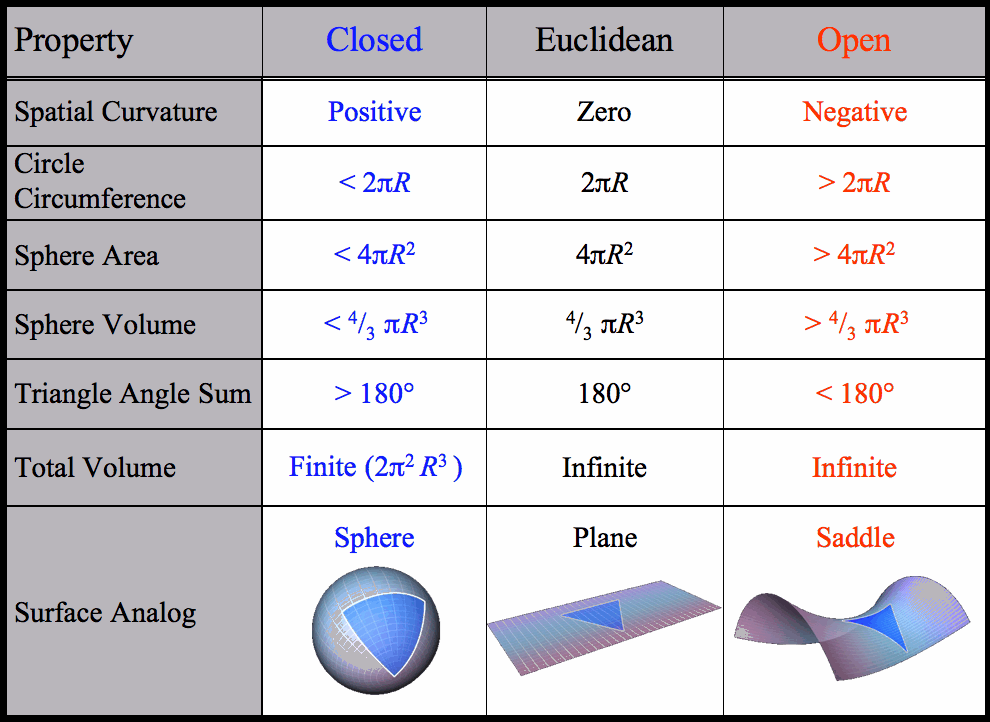
3. Geometrical properties of FLRW-universes.
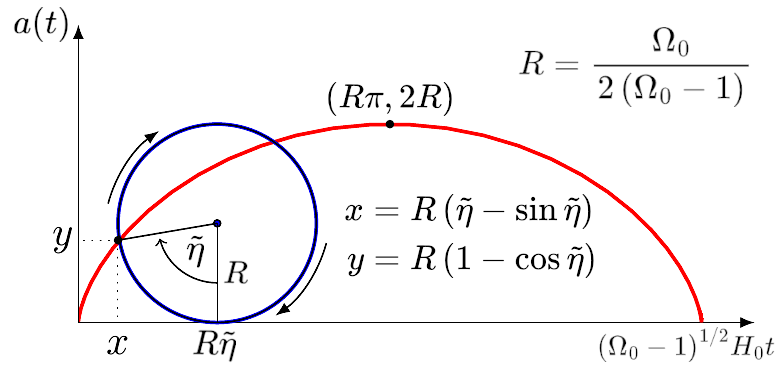
4. Solutions of the Friedmann equations for single and multicomponent universes. The standard LCDM-model.
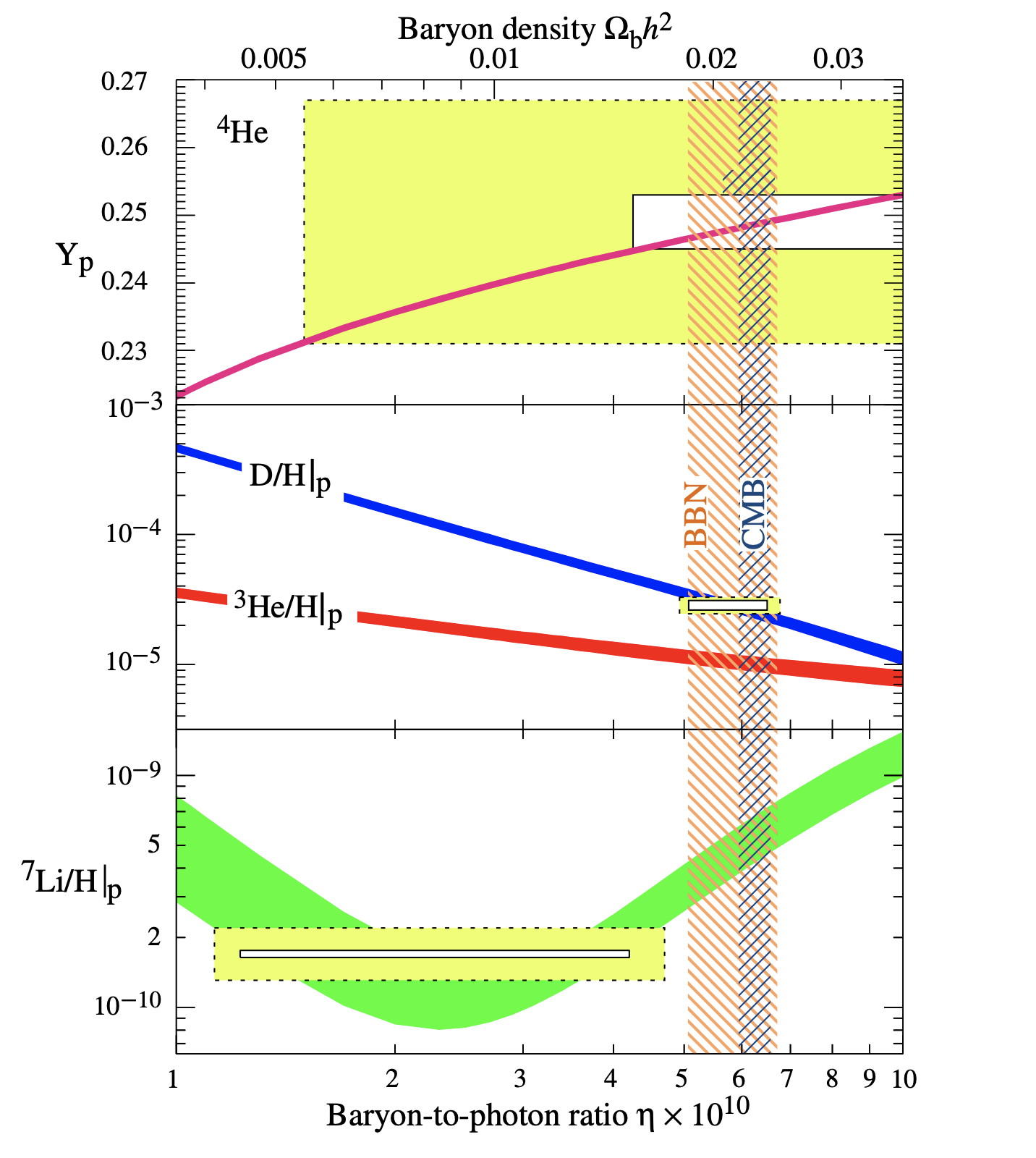
5. Observational pillars of the Big Bang theory. Problems within the theory, and cosmic inflation as a possible solution.
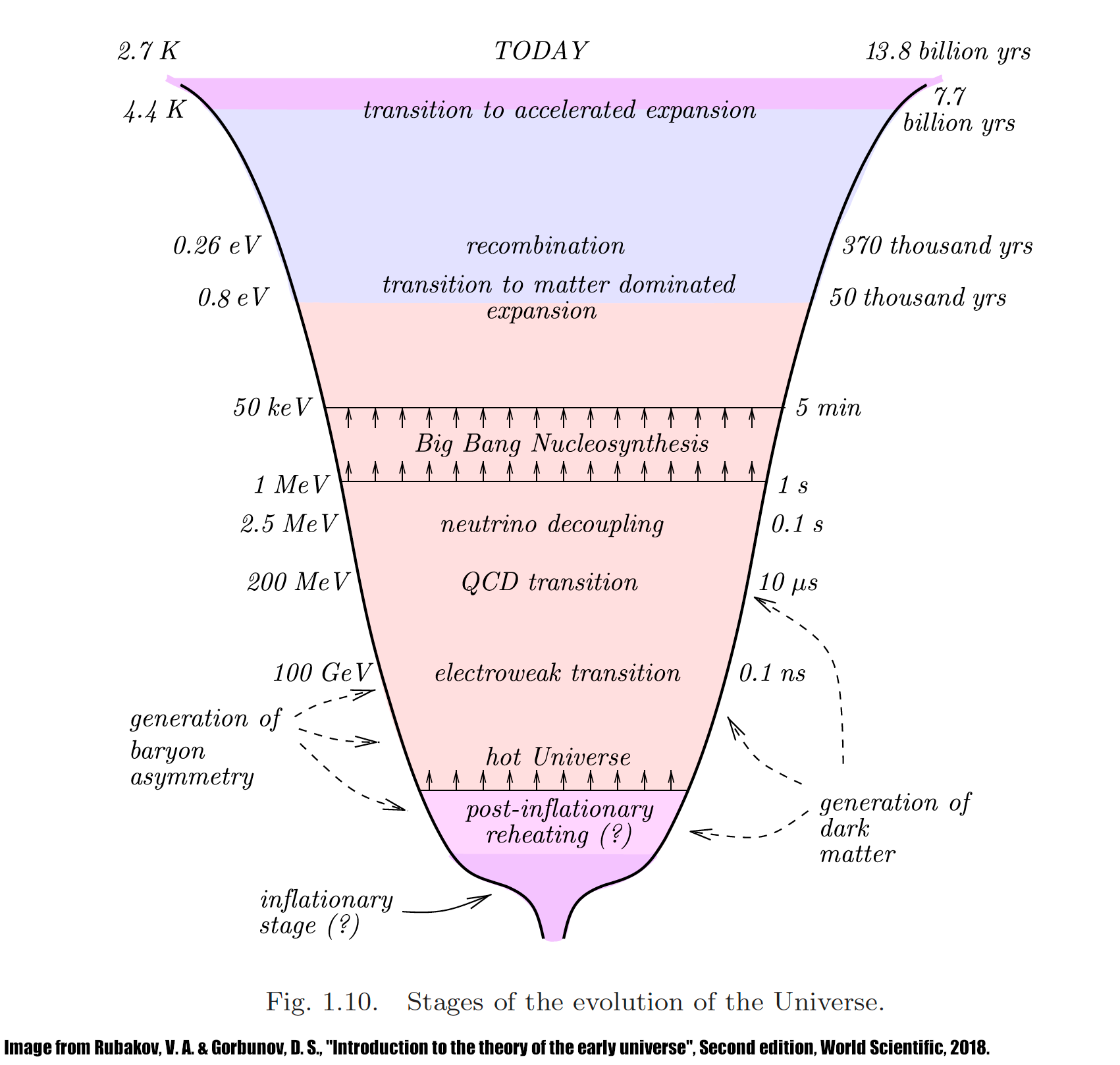
6. The thermal history of the universe. Cosmological distance measures.
7. Type Ia supernova observations.
8. The cosmic microwave background radiation and its fluctuation spectrum.
9. The large scale structure of the universe.
10. Tensions in the Hubble constant measurements.
Recommended literature
Frei Zsolt, Patkos Andras: Inflacios kozmologia (Typotex, 2004). A konyv elso negy fejezetet ajanlom.
Dragan Huterer: A Course in Cosmology (Cambridge University Press, 2023).
Bernard J. T. Jones: Precision cosmology
Scott Dodelson & Fabian Schmidt: Modern Cosmology (3rd, 2nd, 1st edition)
Homework exercises 1.
Homework exercises 2.
Lecture notes
Copernican principle and cosmological velocity fields
Newtonian derivation of the Friedmann equations
Cosmological principle (GR version)
General relativistic derivation of the Friedmann equations
Geometrical properties of FLRW-universes | Summary table | Comoving coordinates (k>0)
Notes on dark energy
Solving Friedmann's equations
Solving Friedmann's equations II. | Cycloid evolution
Cosmological distance measures
Abundances of elements from the BBN (Source publication)
A summary of the thermal history of the universe: I. II.
Utilizing Type Ia Supernovae in Precision Cosmology
Lecture notes on the CMB
Spherical harmonics
Planck CMB Simulator
Measured values of cosmological parameters | Omega parameters
About the Hubble tension | H0 measurement with gravitational waves
Extra notes
Hydrodynamical derivation of the Friedmann equations
Notes on the derivation of the FLRW metric
Peculiar velocities
Relationship between recessional velocity and redshift
Photon propagation in expanding space
E.o.S. for relativistic particles
Linear evolution of matter density fluctuations
Matter power spectrum
The physics of recombination (Video lecture)
Redshift of last scattering
First acoustic peak in CMB
About the origin of CMB anisotropies
Constraints on inflation
Proof of the BGV theorem
Peter Raffai
Last update: September 8., 2025.